

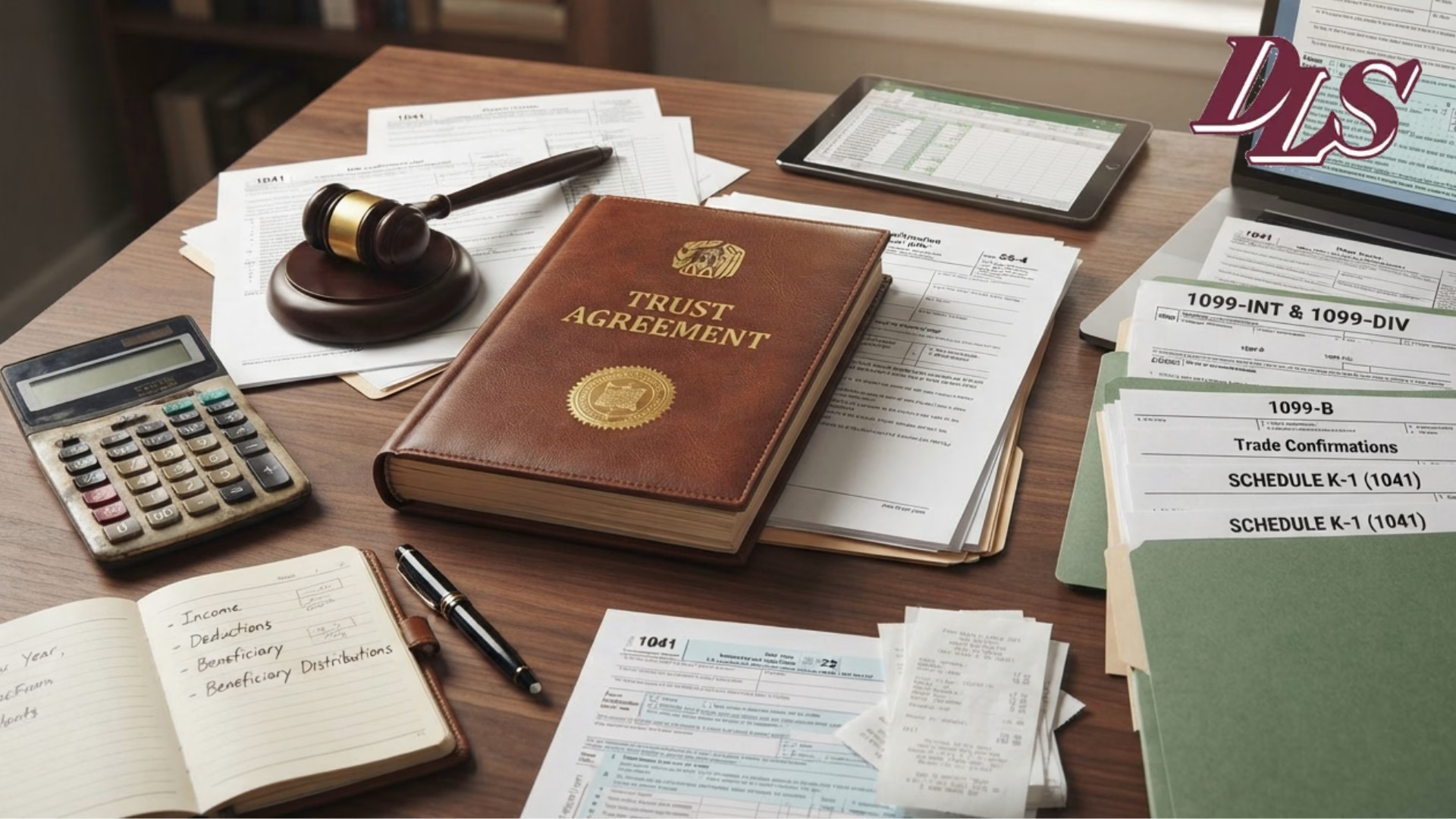
Trust Accounting In Orange County: What Trustees Need to Know

Trust Accounting In Orange County

If you have recently been named a trustee in Orange County, California, you may be feeling the weight of that responsibility. Managing someone else’s assets is serious business, and one of the most important obligations that comes with the role is trust accounting. It is a legal requirement in California.

This guide breaks down what trust accounting actually involves, why it matters, what California law requires, and how working with an experienced CPA in Orange County can protect you from costly mistakes.

If you are a trustee, it’s important to get legal representation to help administer the trust properly. They will also assist in your duty to account as a trustee.

What Is Trust Accounting?

Trust accounting is the process of tracking, recording, and reporting all financial activity within a trust. It is essentially the bookkeeping and financial reporting function of trust administration.

When a trustee manages a trust, they are acting as a fiduciary, meaning they have a legal duty to act in the best interests of the beneficiaries. Trust accounting is how a trustee demonstrates that they are fulfilling that duty. It creates a clear, documented record of every dollar that flows in and out of the trust.

A complete trust accounting typically includes:

  • A detailed inventory of all trust assets at the start of the accounting period
  • All income received by the trust (dividends, rental income, interest, etc.)
  • All expenses paid from the trust (trustee fees, legal costs, taxes, property expenses, etc.)
  • All distributions made to beneficiaries
  • Gains or losses on any assets sold
  • The ending value of all trust assets

Without proper accounting, trustees can face legal challenges from beneficiaries, personal liability for mismanagement, and even removal from their role.

California’s Trust Accounting Requirements

California has some of the most detailed trust accounting rules in the country, governed primarily by the California Probate Code. If you are serving as a trustee in Orange County, you need to understand what the law expects of you.

Who Must Receive an Accounting?

Under the California Probate Code, trustees are generally required to provide a formal accounting to all beneficiaries who are currently entitled to receive income or principal from the trust. This includes remainder beneficiaries in certain situations. There are some exceptions, such as when the trust document explicitly waives the accounting requirement or when the sole trustee is also the sole beneficiary.

How Often Must Accountings Be Provided?

California law requires that trustees provide accountings at least once a year, at the termination of the trust, and when there is a change of trustee. In practice, many trustees provide annual accountings to keep beneficiaries informed and to protect themselves from disputes.

What Must Accounting Include?

The accounting must meet the specific format and content requirements set out in California Probate Code. It must be clear enough for a beneficiary to understand the financial activity and must distinguish between trust principal and trust income, which are treated differently under the law.

Failure to provide a proper accounting can expose a trustee to a petition by beneficiaries asking the court to compel an accounting, which can lead to costly litigation and damage to family relationships.

The Difference Between Principal and Income

One area where trustees often run into trouble is understanding the distinction between trust principal and trust income. California follows the Uniform Fiduciary and Income Principal Act (UFIPA), which governs how different types of receipts and expenses are allocated.

Getting this right requires a solid understanding of both accounting and the applicable California statutes. This is one of the key reasons why working with a knowledgeable CPA is so valuable.

Common Trust Accounting Mistakes in Orange County

Even well-intentioned trustees make mistakes. Here are some of the most common errors that can create serious problems:

Commingling Trust Funds with Personal Assets

A trustee must always keep trust assets completely separate from their own finances. Using a single bank account for both personal and trust funds, even briefly, is a breach of fiduciary duty and can result in personal liability.

Missing Deadlines

California’s one-year accounting requirement catches many new trustees off guard. Falling behind on accountings creates gaps in the record that are difficult to reconstruct later and can alarm beneficiaries who may suspect something is wrong.

Failing to Keep Supporting Documentation

Every transaction in a trust accounting should be supported by a paper trail: bank statements, receipts, invoices, brokerage statements, and tax records. Without documentation, a trustee cannot defend themselves if a beneficiary challenges the accounting.

Incorrectly Allocating Principal and Income

As discussed above, this is a technically demanding area that requires knowledge of both accounting principles and California law. Many trustees inadvertently allocate items incorrectly, which can lead to beneficiary disputes.

Not Reporting Trust Income Taxes Correctly

Trusts are separate tax entities and may have their own tax filing obligations. A trustee must ensure that trust income is properly reported on a fiduciary income tax return (IRS Form 1041; state requirements differ per state) and that taxes are paid on time.

Why Orange County Trustees Benefit from Working with a CPA

Orange County has a large and active estate planning community, and many residents hold their wealth in revocable living trusts, family trusts, and other estate planning structures. When the time comes to administer these trusts, whether following a death, incapacity, or other triggering event, the trustee steps into a demanding and often unfamiliar role.

A CPA who specializes in estate and trust accounting can:

  • Prepare formal trust accountings that meet California’s legal requirements
  • Help trustees understand their fiduciary obligations and avoid costly mistakes
  • Allocate receipts and disbursements correctly between principal and income
  • Prepare fiduciary income tax returns for the trust
  • Coordinate with the trust attorney to ensure the accounting supports the overall administration

For successor trustees who may be stepping into the role for the first time, having an experienced CPA in their corner provides both practical support and peace of mind.

Getting Help with Trust Accounting in Orange County

Serving as a trustee is a meaningful responsibility, and it deserves the same level of professional attention as any other important financial matter. If you are administering a trust in Orange County and need help with trust accounting, fiduciary income tax returns, or understanding your obligations under California law, working with a local CPA who focuses on estate and trust services is one of the smartest decisions you can make.

At Donna L. Stern CPA, APC, we work with trustees throughout Orange County on trust accounting and tax matters.

Reach out today to schedule a consultation and learn how we can support you through the trust administration process.

Donna L. Stern CPA, APC, provides estate and trust accounting services to individuals, families, and fiduciaries throughout Orange County, California. Contact our office to discuss your trust accounting needs.

Disclaimer

The content on this web site is for informational purposes only. Nothing on this website should be construed to be tax/accounting advice, and you should not act or refrain from acting on the basis of any content on this site without seeking appropriate tax/accounting advice regarding your particular situation, from a licensed Certified Public Accountant in your state. The content on this site is not guaranteed to be correct, complete, or up to date.

The office of Donna L. Stern CPA, APC. is in Orange County, California and is only licensed for tax/accounting services in California. Please be advised that Donna L. Stern CPA, APC. only provides tax/accounting services or advice pursuant to a written tax/accounting services agreement. The content on this website is not intended to, and does not, create a CPA-client relationship between you and Donna L. Stern CPA, APC., nor does our receipt of an email or other communication from you.

Some jurisdictions may consider this site to constitute tax/accounting advertising; accordingly, please be advised this is an advertisement. Hiring a Certified Public Accountant is an important decision that you should not make based solely on advertising or on our self-proclaimed expertise. Rather, you should make your own independent evaluation of any Certified Public Accountant who you are thinking about hiring.

Testimonials or endorsements do not constitute a guarantee, warranty or prediction regarding the outcome of your tax/accounting matter. The result portrayed in any testimonials or endorsements were dependent on the facts of that case, and the results will differ if based on different facts. Donna L. Stern CPA, APC. does not offer any guarantees with regard to the outcome of your matter. Prior results in other cases do not guarantee a similar outcome in your case.

IRS CIRCULAR 230 DISCLOSURE: To ensure compliance with requirements imposed by the IRS, we inform you that, to the extent this communication (or any attachment) addresses any tax matter, it was not written to be (and may not be) relied upon to (i) avoid tax-related penalties under the Internal Revenue Code, or (ii) promote, market or recommend to another party any transaction or matter addressed herein (or in any such attachment).

By submitting a form, calling us, or emailing us you consent to receive SMS messages in regards to appointment reminders, office directions, feedback requests, and other relevant communications. I understand that message and data rates may apply and that I can opt out at any time.


Net Unrealized Appreciation (NUA): A Tax Strategy Worth Knowing About

Net Unrealized Appreciation (NUA)

If you have spent years building a career at a company that offered employer stock in your 401(k) or other qualified retirement plan, you may be sitting on a significant amount of appreciation in that stock without realizing the tax opportunity it represents. The Net Unrealized Appreciation strategy, commonly referred to as NUA, is one of the most underused tax planning tools available to people approaching retirement, and for the right person, it can mean tens of thousands of dollars in tax savings.

This post explains what NUA is, how it works, who it benefits most, and why working with a knowledgeable CPA in Orange County is essential before making any decisions.

What Is Net Unrealized Appreciation?

Net Unrealized Appreciation refers to the difference between the original cost basis of employer stock held inside a qualified retirement plan and its current fair market value at the time of distribution.

Here is a simple example. Suppose your employer contributed shares of company stock to your 401(k) over the years, and the total cost basis of those shares is $40,000. By the time you retire, those shares are now worth $200,000. The $160,000 difference between the cost basis and the current value is the Net Unrealized Appreciation.

Ordinarily, when you take money out of a traditional 401(k), every dollar is taxed as ordinary income. Depending on your tax bracket, that can be a significant hit. But the NUA strategy allows you to take a lump-sum distribution of the employer stock and pay ordinary income tax only on the cost basis, not on the full value of the shares. The NUA portion, that $160,000 in our example, is instead taxed at the long-term capital gains rate when you eventually sell the stock, which is substantially lower than ordinary income tax rates for most people.

How the NUA Strategy Works Step by Step

To take advantage of NUA treatment, you need to follow the rules carefully. Here is how the process generally works:

Step 1: Qualify for a Triggering Event

The IRS requires that a lump-sum distribution be triggered by one of four qualifying events:

  • Reaching age 59 1/2
  • Separation from service (leaving your employer)
  • Death
  • Disability (for self-employed individuals)

The most common scenario for working professionals is separation from service, meaning you retire or leave the company. Once one of these events occurs, you become eligible to take a lump-sum distribution from your qualified plan. You should confirm with your company and your employer to verify if you qualify for this distribution before proceeding.

Step 2: Take a Lump-Sum Distribution

This is one of the most important requirements and one that catches many people off guard. The NUA strategy requires that you take a complete lump-sum distribution of your entire account balance from the plan within a single tax year. You cannot cherry-pick just the employer stock and leave the rest in the plan.

That does not mean everything gets distributed in cash. Typically, the employer stock is distributed in-kind, meaning you receive the actual shares rather than their cash equivalent. 

Step 3: Move the Stock to a Taxable Brokerage Account

The employer stock is transferred directly to a taxable brokerage account, not an IRA. This is where the tax treatment applies. When the distribution occurs, you will owe ordinary income tax on the cost basis of the shares. That tax is due in the year of the distribution.

Step 4: Sell the Stock at Your Own Pace

Once the shares are in your taxable account, you are in control of when you sell them. When you do sell, the NUA portion of the gain is taxed at the long-term capital gains rate, regardless of how long you have held the stock outside the plan. Any additional appreciation that occurs after the distribution date is treated as a short-term or long-term capital gain depending on your holding period from that point forward.

Note: But be careful. Taking a lump sum distribution on a large amount can create a significant tax burden. Which is why it’s important to consult with your financial advisor and your CPA to understand what the next 3 years of tax liability looks like so you’re not caught off guard.

Who Benefits Most from the NUA Strategy?

NUA is not the right move for everyone. The strategy makes the most sense when several conditions align:

Low Cost Basis Relative to Current Value

The greater the gap between what the employer paid for the stock and what it is worth today, the bigger the potential tax benefit. If your cost basis is 20 percent of the current market value, the NUA opportunity is substantial. If the cost basis is 80 percent of the current value, the math may not work in your favor.

High Ordinary Income Tax Rate

NUA is particularly valuable for people who expect to be in a high income tax bracket either now or in retirement. The strategy converts what would otherwise be ordinary income into capital gains income, and the higher your ordinary rate, the greater the savings.

Plans to Hold or Gradually Sell the Stock

Since you pay ordinary income tax on the cost basis in the year of distribution, you want to have a plan for the stock that justifies that upfront cost. If you intend to sell all the shares immediately, the NUA advantage shrinks. The strategy works best when you have a thoughtful plan for managing the shares over time.

Working with a CPA in Orange County on NUA Planning

The NUA strategy sits at the intersection of retirement planning, tax law, and investment strategy. It requires getting the mechanics exactly right, understanding both federal and California tax implications, and making sure the decision fits into your broader financial plan.

At Donna L. Stern CPA, APC, we work with clients and financial advisors throughout Orange County who are approaching retirement and looking to minimize their tax burden on employer stock held in retirement plans. We help clients evaluate whether the NUA strategy makes sense for their situation, coordinate with plan administrators to ensure the distribution is handled correctly, and make sure the tax reporting is accurate.

If you have employer stock in a 401(k) or other qualified plan and are considering retirement, it is worth having a conversation with your financial advisor about NUA before you make any distribution decisions.

Contact our office today to schedule a consultation.

Donna L. Stern CPA, APC, provides tax planning and retirement distribution services to individuals and families throughout Orange County, California. Reach out to learn how we can help you make the most of your retirement assets.

Disclaimer

The content on this web site is for informational purposes only. Nothing on this website should be construed to be tax/accounting advice, and you should not act or refrain from acting on the basis of any content on this site without seeking appropriate tax/accounting advice regarding your particular situation, from a licensed Certified Public Accountant in your state. The content on this site is not guaranteed to be correct, complete, or up to date.

The office of Donna L. Stern CPA, APC. is in Orange County, California and is only licensed for tax/accounting services in California. Please be advised that Donna L. Stern CPA, APC. only provides tax/accounting services or advice pursuant to a written tax/accounting services agreement. The content on this website is not intended to, and does not, create a CPA-client relationship between you and Donna L. Stern CPA, APC., nor does our receipt of an email or other communication from you.

Some jurisdictions may consider this site to constitute tax/accounting advertising; accordingly, please be advised this is an advertisement. Hiring a Certified Public Accountant is an important decision that you should not make based solely on advertising or on our self-proclaimed expertise. Rather, you should make your own independent evaluation of any Certified Public Accountant who you are thinking about hiring.

Testimonials or endorsements do not constitute a guarantee, warranty or prediction regarding the outcome of your tax/accounting matter. The result portrayed in any testimonials or endorsements were dependent on the facts of that case, and the results will differ if based on different facts. Donna L. Stern CPA, APC. does not offer any guarantees with regard to the outcome of your matter. Prior results in other cases do not guarantee a similar outcome in your case.

IRS CIRCULAR 230 DISCLOSURE: To ensure compliance with requirements imposed by the IRS, we inform you that, to the extent this communication (or any attachment) addresses any tax matter, it was not written to be (and may not be) relied upon to (i) avoid tax-related penalties under the Internal Revenue Code, or (ii) promote, market or recommend to another party any transaction or matter addressed herein (or in any such attachment).

By submitting a form, calling us, or emailing us you consent to receive SMS messages in regards to appointment reminders, office directions, feedback requests, and other relevant communications. I understand that message and data rates may apply and that I can opt out at any time.

Trust Accounting In Orange County: Why DIY Could Cost You More Than You Think

Trust Accounting In Orange County

There’s a good reason why trust accounting is often described as “simple, but not easy.” The rules are out there, the forms are available, and there’s no shortage of online advice. But for trustees in Orange County, especially those overseeing high-value trusts, the do-it-yourself route can quietly become a ticking time bomb.

At Donna L. Stern, C.P.A APC, we’ve seen this pattern more times than we can count: a well-meaning trustee tries to keep things “in house,” only to find themselves stuck in a complicated mess.

So let’s talk about why cutting corners with trust accounting isn’t saving you anything—and how a professional CPA can help protect not just your finances, but your reputation.

What Is Trust Accounting, Really?

If you’re reading this, you probably already know that trust accounting isn’t just a spreadsheet with a few notes. It’s a formal, legally required report detailing every financial move you make as a trustee.

A trust accounting typically includes:

  • Beginning trust balance
  • Itemized income (rent, interest, dividends, etc.)
  • Disbursements (bills, distributions, taxes)
  • Gains and losses on investments
  • Ending trust balance
  • Supporting documents (bank statements, receipts, etc.)
  • And…potentially change of form assets

In California, the Probate Code outlines very specific rules around how this is done and when. For most trustees, that means providing an accounting annually, upon request, and when the trust terminates.

Miss something? That could open the door for more challenges than an awkward holiday get-together.

The Myth of “It’s Just Numbers”

Here’s where a lot of people get tripped up.

They assume trust accounting is just a fancier version of managing a personal budget or business books. After all, if you’ve balanced a checkbook or handled QuickBooks, how hard can it be?

The reality: trust accounting exists in its own world. It’s not just about “keeping track”—it’s about complying with specific standards that are enforced by the courts. And they don’t care how good your spreadsheet looks if it doesn’t follow the rules.

This is where the trouble begins for many DIY trustees.

Common DIY Mistakes We See

If you’re handling a trust of any size, even a small mistake can have major consequences. Some of the most common issues we encounter include:

  1. Commingling Funds

This is when personal and trust funds are mixed together—even temporarily. It makes the accounting even more complicated and can rack up more legal fees and accounting fees unwinding what was done.

  1. Improper Disbursements

Paying for things that aren’t allowed under the trust’s terms or not documenting them properly. Even if your intentions are good, this looks bad.

  1. Missed Deadlines

California law requires timely accountings. Waiting until the last minute or ignoring requests from beneficiaries is an open invitation for legal trouble.

  1. Lack of Documentation

You need to back up every entry with records. 

  1. Wrong Accounting Format

There’s a specific way trust accounting should be presented in California, governed by the California Probate Code. Using the wrong format could get your report rejected outright.

The Real Cost of DIY

Let’s put it plainly: the idea of “saving money” by handling trust accounting on your own only works if everything goes perfectly. One wrong turn, and it can cost you thousands.

Here’s a common scenario we see:

  • A trustee tries to DIY an accounting for a trust.
  • Misses some reporting requirements, mixes up a few distributions.
  • One beneficiary consults a lawyer after noticing inconsistencies.
  • The trustee is now facing scrutiny.
  • A professional is finally brought in to fix what could have been done right the first time.

End result? The trustee ends up spending far more money fixing the problem than they would have if they had hired expert help at the start.

What a CPA Can Do That You Can’t Google

We’re not just here to run numbers. At Donna L. Stern, C.P.A, APC, we specialize in trust accounting and understand how California courts want to see your records.

Here’s what we bring to the table:

  • Court-Ready Reports: We use the correct format, depending on your needs.
  • Detailed Recordkeeping
  • Deadline Management: We stay on top of timelines so you don’t have to.
  • Collaboration with your legal council

Is Professional Trust Accounting Right for You?

Our services are designed for trustees handling significant assets—especially those who understand that financial responsibility comes with legal weight.

If you’re managing an estate of any size, a family trust with complex investments, or navigating difficult beneficiary dynamics, professional accounting isn’t a luxury—it’s a safeguard.

Final Thought: Protect More Than Just the Numbers

Being a trustee is more than a financial job—it’s an obligation. It involves money, yes, but it also involves trust in the literal sense. The people named in that trust are relying on you to handle things responsibly, accurately, and transparently.

If you’re thinking of going the DIY route, just know that trust accounting isn’t something you want to get “mostly right.” In this field, 95% correct isn’t good enough

Let us help you get it right from the start.

Need Expert Help With Trust Accounting in Orange County?

Contact Donna L. Stern, C.P.A, APC., today to schedule a consultation and ensure your trust is handled with precision and care.

Disclaimer

The content on this web site is for informational purposes only. Nothing on this website should be construed to be tax/accounting advice, and you should not act or refrain from acting on the basis of any content on this site without seeking appropriate tax/accounting advice regarding your particular situation, from a licensed Certified Public Accountant in your state. The content on this site is not guaranteed to be correct, complete, or up to date.

The office of Donna L. Stern CPA, APC. is in Orange County, California and is only licensed for tax/accounting services in California. Please be advised that Donna L. Stern CPA, APC. only provides tax/accounting services or advice pursuant to a written tax/accounting services agreement. The content on this website is not intended to, and does not, create a CPA-client relationship between you and Donna L. Stern CPA, APC., nor does our receipt of an email or other communication from you.

Some jurisdictions may consider this site to constitute tax/accounting advertising; accordingly, please be advised this is an advertisement. Hiring a Certified Public Accountant is an important decision that you should not make based solely on advertising or on our self-proclaimed expertise. Rather, you should make your own independent evaluation of any Certified Public Accountant who you are thinking about hiring.

Testimonials or endorsements do not constitute a guarantee, warranty or prediction regarding the outcome of your tax/accounting matter. The result portrayed in any testimonials or endorsements were dependent on the facts of that case, and the results will differ if based on different facts. Donna L. Stern CPA, APC. does not offer any guarantees with regard to the outcome of your matter. Prior results in other cases do not guarantee a similar outcome in your case.

IRS CIRCULAR 230 DISCLOSURE: To ensure compliance with requirements imposed by the IRS, we inform you that, to the extent this communication (or any attachment) addresses any tax matter, it was not written to be (and may not be) relied upon to (i) avoid tax-related penalties under the Internal Revenue Code, or (ii) promote, market or recommend to another party any transaction or matter addressed herein (or in any such attachment).

By submitting a form, calling us, or emailing us you consent to receive SMS messages in regards to appointment reminders, office directions, feedback requests, and other relevant communications. I understand that message and data rates may apply and that I can opt out at any time.

How To Choose The Right Estate Tax Accountant In Orange County

Estate Tax Accountant In Orange County

Navigating the financial and legal complexities of an estate or trust can be overwhelming, especially in Orange County, where real estate and asset values are high. While DIY solutions might seem tempting, the reality is that the tax code is a labyrinth of rules that changes constantly. This is where a specialized estate and trust tax accountant comes in. But how do you choose the right one? It’s not about finding the cheapest option; it’s about finding a professional who can protect your assets and provide peace of mind.

Here at Donna L. Stern, C.P.A., we’ve been helping individuals and families in Orange County since 1985. We’ve seen firsthand the difference that expertise and a personal touch can make. This guide is meant to help you understand what to look for, so you can make an informed decision and avoid the common pitfalls that can lead to an audit.

  1. The Specialist Advantage: Why a Generalist Won’t Cut It

When you’re dealing with an estate or a trust, you’re not just filing a standard tax return. You’re dealing with a complex web of forms and regulations that are entirely different from personal or business taxes. An accountant who primarily handles business bookkeeping or personal income tax might not have the specific knowledge to handle estate and trust tax forms like the IRS Form 706 (Estate Tax Return) or Form 1041 (Fiduciary Income Tax Return).

These forms require a deep understanding of unique concepts like the estate tax exemption, generation-skipping transfer tax, and the allocation of income and expenses between beneficiaries. A general CPA might miss crucial details, leading to errors. Look for an accountant who highlights “estate and trust tax” as a core part of their services. This is your first and most important filter.

  1. Experience Is Non-Negotiable

Orange County is a unique market with its own set of challenges, particularly concerning real estate. You need an accountant who not only knows the federal laws but also the specifics of California law. An experienced estate accountant or probate accounting Orange County professional will be familiar with local court procedures and state-specific tax issues.

For example, they’ll understand the intricacies of property tax reassessment under Proposition 19, which can be a major factor in valuing an estate. An experienced professional has seen it all and can anticipate problems before they arise. At Donna L. Stern, C.P.A., we have decades of experience navigating these exact scenarios, which means you’re not just getting a service—you’re getting a partner who knows the landscape.

  1. The Importance of a Proactive Partner

An accountant’s job isn’t just to fill out forms and submit them. They should be a proactive advisor who helps you minimize tax liability and preserve the estate’s value. This is especially true for trust accounting in Orange County. A good accountant will:

  • Offer Strategic Advice: They should look for ways to legally reduce the estate’s tax burden, such as identifying all eligible deductions, credits, and exemptions. This might include advice on timing asset sales or structuring distributions to beneficiaries in the most tax-efficient way.
  • Keep You Organized: Estate and trust administration generates a mountain of paperwork. A skilled accountant will help you organize financial records and documentation in a way that’s easy to understand and readily available should the IRS ever come knocking. Organized records are your best defense against an audit.
  • Communicate Clearly: The financial language of estates and trusts can be dense. Your accountant should be able to explain complex concepts in plain English so you feel confident and informed. They should be responsive to your questions and concerns, making you feel like a priority, not just another file.
  1. Look for a Relationship, Not Just a Transaction

The administration of an estate or trust is often a long-term process, sometimes spanning years. You’re not just hiring someone to do a one-time task; you’re looking for a professional you can trust and rely on. When you’re in the midst of a difficult time, the last thing you want is a generic, impersonal service.

At Donna L. Stern, C.P.A., our philosophy is to build long-term relationships. We get to know our clients and their unique situations. We understand that behind every estate or trust is a family and a legacy. This personal approach is what makes the difference. We believe in providing personalized attention and timely, compassionate service that goes beyond the numbers.

Your Next Step

Choosing the right estate and trust tax Orange County accountant is a critical decision. It’s an investment in your peace of mind and the financial well-being of the beneficiaries. Don’t settle for a professional who treats this complex process as a simple transaction. Look for a true specialist with proven experience, a proactive mindset, and a commitment to clear communication.

An audit is a possibility, but a prepared, accurate, and professionally filed return is your best insurance policy. By taking the time to find the right partner, you can ensure that the estate administration process is handled correctly from the start, protecting assets and avoiding unnecessary complications.

Disclaimer

The content on this web site is for informational purposes only. Nothing on this website should be construed to be tax/accounting advice, and you should not act or refrain from acting on the basis of any content on this site without seeking appropriate tax/accounting advice regarding your particular situation, from a licensed Certified Public Accountant in your state. The content on this site is not guaranteed to be correct, complete, or up to date.

The office of Donna L. Stern CPA, APC. is in Orange County, California and is only licensed for tax/accounting services in California. Please be advised that Donna L. Stern CPA, APC. only provides tax/accounting services or advice pursuant to a written tax/accounting services agreement. The content on this website is not intended to, and does not, create a CPA-client relationship between you and Donna L. Stern CPA, APC., nor does our receipt of an email or other communication from you.

Some jurisdictions may consider this site to constitute tax/accounting advertising; accordingly, please be advised this is an advertisement. Hiring a Certified Public Accountant is an important decision that you should not make based solely on advertising or on our self-proclaimed expertise. Rather, you should make your own independent evaluation of any Certified Public Accountant who you are thinking about hiring.

Testimonials or endorsements do not constitute a guarantee, warranty or prediction regarding the outcome of your tax/accounting matter. The result portrayed in any testimonials or endorsements were dependent on the facts of that case, and the results will differ if based on different facts. Donna L. Stern CPA, APC. does not offer any guarantees with regard to the outcome of your matter. Prior results in other cases do not guarantee a similar outcome in your case.

IRS CIRCULAR 230 DISCLOSURE: To ensure compliance with requirements imposed by the IRS, we inform you that, to the extent this communication (or any attachment) addresses any tax matter, it was not written to be (and may not be) relied upon to (i) avoid tax-related penalties under the Internal Revenue Code, or (ii) promote, market or recommend to another party any transaction or matter addressed herein (or in any such attachment).

By submitting a form, calling us, or emailing us you consent to receive SMS messages in regards to appointment reminders, office directions, feedback requests, and other relevant communications. I understand that message and data rates may apply and that I can opt out at any time.
Avoid These 5 Real Estate Tax Mistakes – Only The Top Orange County Accountant Will Tell You This

Real Estate Tax Mistakes

When it comes to handling real estate taxes tied to estates and trusts, mistakes are more common than you might think, and they’re often expensive. Whether you’re administering a trust, managing a probate estate, or planning for your family’s future, it’s not enough to simply hand everything to a general accountant and hope for the best.

Real estate tied to estates and trusts requires a deeper understanding of tax law, timing, and compliance. That’s why the most successful trustees and executors in Orange County turn to specialized professionals like an experienced estate and trust accountant to avoid common pitfalls.

I’m Donna L. Stern, CPA, and after decades of working with estate and trust tax clients in Orange County, I’ve seen it all. Here are five real estate tax mistakes I regularly see, even from well-meaning people with good advisors. If you’re in charge of an estate, a trust, or just want to avoid making costly moves, take note.

  1. Not Getting a Step-Up in Basis Valuation

This is one of the biggest missed opportunities, and it’s one that the average accountant might overlook if they’re not focused on estates.

When someone passes away, their real estate typically receives a step-up in basis to its fair market value at the date of death. If that home was bought decades ago for $100,000 and is now worth $1.5 million, that’s a $1.4 million gain wiped clean from capital gains tax if handled correctly.

The mistake? Failing to get a qualified appraisal at the right time. Without it, you could be stuck using the original basis and paying massive capital gains tax later.

Tip: Always get a formal appraisal around the date of death. Don’t rely on guesswork or Zillow estimates. This isn’t optional; it’s a tax strategy.

  1. Filing the Wrong Return – or Not Filing at All

A trust or estate is a legal tax entity, which means it often needs to file its own tax return – Form 1041. If you’re the executor or trustee, it’s your job to make sure this happens.

But many people confuse personal returns, estate returns, and trust returns. That confusion can lead to:

  • Late penalties
  • Missed deductions
  • IRS notices that cause real stress

And remember: Filing isn’t just about checking a box. A seasoned estate accountant knows how to structure distributions and deductions to minimize taxes for both the estate/trust and the beneficiaries.

  1. Waiting Too Long to Sell Estate Property

Real estate held in a trust or estate doesn’t always need to be sold right away, but holding on too long can cause tax headaches.

Why?

  • Appreciation after death can create new capital gains if you don’t sell within a reasonable window.
  • Rental income from the property brings a different set of tax rules and can complicate the estate’s return.
  • Property taxes under Prop 19 (in California) can skyrocket if you’re not eligible for parent-child exclusions.

What’s the fix? A smart trust accounting strategy that includes timing property sales in coordination with the step-up in basis and the estate’s closure timeline.

Every estate is different, but if you’re just holding property “to decide later,” you’re likely creating a bigger tax bill than you need to.

  1. Not Understanding California’s Property Tax Rules (Prop 19)

Since Proposition 19 passed, many families are surprised when their inherited property’s tax bill jumps overnight. That’s because parent-to-child exclusions aren’t automatic anymore, and they’re much more limited.

If you don’t qualify for an exclusion, the property will be reassessed at full market value.

This means: A property that’s been taxed at $4,000/year for decades might suddenly be taxed at $15,000/year or more.

Mistake: Assuming you’ll inherit your parents’ or grandparents’ tax rate.

Solution: Consult a CPA who understands both estate tax rules and California’s property tax regulations. This isn’t a generalist’s job.

  1. Treating Trust and Probate Accounting Like Basic Bookkeeping

Handling the books for a trust or estate isn’t just about balancing a checkbook.

You have to:

  • Track income and expenses for the estate
  • Allocate those to beneficiaries
  • Maintain court-compliant accounting if the estate is in probate
  • Prepare detailed reports if required by the trust terms

And here’s the catch: If you’re off by even a small amount, it can cause more issues than doing it right the first time.

That’s why clients across Orange County look for experts in probate accounting and trust accounting, not just a general bookkeeper or tax preparer.

Why Work With a Specialized Estate Accountant?

At Donna L. Stern, C.P.A., we don’t just file forms. We help clients avoid unnecessary taxes, stay in compliance, and keep beneficiaries happy by making everything run smoothly.

Our focus is on:

  • Estate and Trust Tax in Orange County
  • Trust Accounting and Probate Accounting
  • Navigating California’s complex real estate and tax rules

Our clients are trustees, executors, estate attorneys, and high-net-worth families who want it done right, not just done.

In Summary: What You Should Do Next

If you’re in charge of an estate or trust with real estate assets, don’t leave taxes to chance. Here’s your action list:

  • Get a professional appraisal at the time of death
  • Make sure the correct tax returns are filed
  • Time real estate sales strategically
  • Understand Prop 19 and reassessment risks
  • Use proper trust and probate accounting, not DIY spreadsheets

Need Help With Estate or Trust Tax in Orange County?

We’ve helped clients across Newport Beach, Irvine, Huntington Beach, and all over Orange County navigate estate and trust taxes with confidence.

Schedule a consultation with Donna L. Stern, C.P.A., today, and get expert guidance from someone who knows exactly how to protect your estate and your peace of mind.

Disclaimer

The content on this web site is for informational purposes only. Nothing on this website should be construed to be tax/accounting advice, and you should not act or refrain from acting on the basis of any content on this site without seeking appropriate tax/accounting advice regarding your particular situation, from a licensed Certified Public Accountant in your state. The content on this site is not guaranteed to be correct, complete, or up to date.

The office of Donna L. Stern CPA, APC. is in Orange County, California and is only licensed for tax/accounting services in California. Please be advised that Donna L. Stern CPA, APC. only provides tax/accounting services or advice pursuant to a written tax/accounting services agreement. The content on this website is not intended to, and does not, create a CPA-client relationship between you and Donna L. Stern CPA, APC., nor does our receipt of an email or other communication from you.

Some jurisdictions may consider this site to constitute tax/accounting advertising; accordingly, please be advised this is an advertisement. Hiring a Certified Public Accountant is an important decision that you should not make based solely on advertising or on our self-proclaimed expertise. Rather, you should make your own independent evaluation of any Certified Public Accountant who you are thinking about hiring.

Testimonials or endorsements do not constitute a guarantee, warranty or prediction regarding the outcome of your tax/accounting matter. The result portrayed in any testimonials or endorsements were dependent on the facts of that case, and the results will differ if based on different facts. Donna L. Stern CPA, APC. does not offer any guarantees with regard to the outcome of your matter. Prior results in other cases do not guarantee a similar outcome in your case.

IRS CIRCULAR 230 DISCLOSURE: To ensure compliance with requirements imposed by the IRS, we inform you that, to the extent this communication (or any attachment) addresses any tax matter, it was not written to be (and may not be) relied upon to (i) avoid tax-related penalties under the Internal Revenue Code, or (ii) promote, market or recommend to another party any transaction or matter addressed herein (or in any such attachment).

By submitting a form, calling us, or emailing us you consent to receive SMS messages in regards to appointment reminders, office directions, feedback requests, and other relevant communications. I understand that message and data rates may apply and that I can opt out at any time.

Hiring An Estate Tax Accountant? Ask These 5 Questions Before Signing Anything

Hire An Estate Tax Accountant

Estate tax is one of those things many people don’t think about until they absolutely have to. Maybe someone close to you passed away, or perhaps you’re planning your own estate to make sure your loved ones aren’t left with a financial mess. Either way, hiring the right estate tax accountant is a serious decision—and not one you want to rush.

At Donna L. Stern, C.P.A., we’ve worked with high-net-worth individuals, business owners, and families who are navigating complex estate situations. If you’re in that same boat, here are five essential questions to ask before signing anything with an estate tax accountant.

  1. What Kind of Experience Do You Have With Estate Tax Cases Like Mine?

Let’s get one thing out of the way: not all accountants are estate tax experts.

Just because someone has “CPA” after their name doesn’t mean they’ve handled the kind of estate situation you’re facing. Maybe you’ve got property in multiple states. Or maybe you’re dealing with family trusts, large charitable donations, or business succession plans. These things aren’t just line items—they can make or break an estate plan.

What to listen for: Look for specific examples, not just vague reassurance. A seasoned estate tax accountant should be able to talk about their experience with similar estates, tax strategies they’ve used, and common pitfalls they’ve helped clients avoid.

  1. Can You Walk Me Through How You Work With Clients?

Estate planning and estate tax preparation are not one-time conversations. You’re not just dropping off a stack of papers and waiting for a call. A quality accountant should offer a structured, clear process—and they should be able to explain it in plain English.

Ask them how often they’ll communicate with you, what documents they’ll need, and how they handle updates to the estate or changes in tax law.

  1. How Do You Stay Updated on Changes in Estate Tax Laws?

Tax laws don’t just change—they evolve. Estate tax laws especially can vary from year to year, and they can be wildly different depending on the state. One year, a specific deduction is available; the next, it’s gone.

That’s why it’s important to hire someone who doesn’t just know the laws—they stay on top of them.

Tip: Ask if they attend tax law seminars, are part of professional associations, or subscribe to legal/tax journals. You want a professional who takes continuing education seriously, especially in a specialized field like this.

  1. What’s Your Fee Structure? Are There Any Additional Costs I Should Know About?

It’s perfectly normal for a top-tier estate tax accountant to charge premium rates. What’s not okay is being surprised by hidden fees later on.

Some accountants charge by the hour, while others use a flat fee for estate work. It’s smart to ask what’s included in that price. Will they be working with your attorney? Do they offer ongoing support if questions come up after the filing? Will there be extra charges for multiple filings or revisions?

A clear answer upfront can save you stress (and money) later.

  1. How Do You Coordinate With Attorneys or Financial Advisors?

Estate planning often involves more than just your accountant. You might also have an estate attorney, a financial advisor, or even a trust officer. The best estate tax accountants know how to work as part of a team.

Ask how they coordinate with other professionals. Are they comfortable joining strategy meetings? Will they handle communication, or prefer you relay messages back and forth?

Bottom line: You want someone who can play well with others—especially when it comes to managing your financial legacy.

Bonus Tip: Don’t Wait Until It’s Urgent

Many people wait until there’s a major life event—an inheritance, a death, or a large financial move—before looking for estate tax help. By then, you’re often in damage control mode.

If you have significant assets or a complex family structure, it’s worth finding the right accountant before you need one. That gives you time to plan properly, ask the right questions, and feel confident about the future.

What Sets Donna L. Stern, C.P.A. Apart?

We understand that when you’re dealing with estate tax matters, you’re not just dealing with numbers—you’re dealing with legacy, family, and sometimes grief. Our clients come to us for more than just compliance. They come for strategy, insight, and peace of mind.

With over 40 years of experience in high-level estate and tax work, we’ve seen it all: multi-state estates, family business transitions, trusts with unique stipulations—you name it.

When you work with us, here’s what you can expect:

  • Customized strategies tailored to your specific estate.
  • Clear, upfront pricing so you know exactly what to expect.
  • Ongoing support—because estate planning doesn’t stop at one conversation.
  • Teamwork with your attorney or financial planner to ensure every piece fits together.

Final Thoughts

Hiring an estate tax accountant is a big decision. You’re trusting someone with sensitive financial information and asking them to guide you through some of the most complicated parts of the tax code.

It’s worth taking the time to ask the right questions, listen closely to the answers, and trust your instincts.

If you’re ready to talk about your estate tax needs, or just want a second opinion, Donna L. Stern, C.P.A. is here to help.

Need help with estate tax planning?

Contact Donna L. Stern, C.P.A. today for a private consultation. We work exclusively with clients who need personalized, expert-level estate tax services.

Disclaimer

The content on this web site is for informational purposes only. Nothing on this website should be construed to be tax/accounting advice, and you should not act or refrain from acting on the basis of any content on this site without seeking appropriate tax/accounting advice regarding your particular situation, from a licensed Certified Public Accountant in your state. The content on this site is not guaranteed to be correct, complete, or up to date.

The office of Donna L. Stern CPA, APC. is in Orange County, California and is only licensed for tax/accounting services in California. Please be advised that Donna L. Stern CPA, APC. only provides tax/accounting services or advice pursuant to a written tax/accounting services agreement. The content on this website is not intended to, and does not, create a CPA-client relationship between you and Donna L. Stern CPA, APC., nor does our receipt of an email or other communication from you.

Some jurisdictions may consider this site to constitute tax/accounting advertising; accordingly, please be advised this is an advertisement. Hiring a Certified Public Accountant is an important decision that you should not make based solely on advertising or on our self-proclaimed expertise. Rather, you should make your own independent evaluation of any Certified Public Accountant who you are thinking about hiring.

Testimonials or endorsements do not constitute a guarantee, warranty or prediction regarding the outcome of your tax/accounting matter. The result portrayed in any testimonials or endorsements were dependent on the facts of that case, and the results will differ if based on different facts. Donna L. Stern CPA, APC. does not offer any guarantees with regard to the outcome of your matter. Prior results in other cases do not guarantee a similar outcome in your case.

IRS CIRCULAR 230 DISCLOSURE: To ensure compliance with requirements imposed by the IRS, we inform you that, to the extent this communication (or any attachment) addresses any tax matter, it was not written to be (and may not be) relied upon to (i) avoid tax-related penalties under the Internal Revenue Code, or (ii) promote, market or recommend to another party any transaction or matter addressed herein (or in any such attachment).

By submitting a form, calling us, or emailing us you consent to receive SMS messages in regards to appointment reminders, office directions, feedback requests, and other relevant communications. I understand that message and data rates may apply and that I can opt out at any time.
How Much Does a Tax Preparer in Orange County Typically Charge

How Much Does A Tax Preparer Charge

When it comes to taxes, everyone wants to get it right. That’s especially true in Orange County, where financial situations can get complicated fast. Whether you’re a business owner, a high-income earner, or simply someone with investments and multiple income streams, working with a seasoned tax preparer isn’t just helpful, it’s smart.

But how much does it cost to hire a tax preparer in Orange County?

Let’s break it down in simple terms so you know what to expect before you schedule your next appointment.

Pricing Isn’t One-Size-Fits-All

The truth is, the cost of tax preparation varies widely. It depends on a few key things:

  • The complexity of your return
  • The number of income sources you have
  • Whether you own a business or rental properties
  • If you’re filing jointly or separately
  • The credentials and experience of the tax preparer

In Orange County, a basic tax return might cost a few hundred dollars. But if your financial picture is more complicated, say, you own a business, have multiple investment accounts, or need strategic planning the price goes up accordingly.

What’s the Average Cost?

Let’s talk numbers. For a simple individual return (no itemizing, no business income), you might pay anywhere from $500 to $600 in Orange County.

But that’s just the starting point.

If you’re filing a Schedule C for a business, need to itemize deductions, or have multiple forms to include (like 1099s, K-1s, etc.), the cost can range from $750 to $1,500 or more.

At Donna L. Stern, C.P.A., we specialize in handling more advanced tax situations. Our clients typically aren’t just looking to file; they want strategic advice, planning, and attention to detail. For that level of service, fees often start around $900 and go upward depending on complexity.

Why Do Costs Vary So Much?

It’s not just about plugging numbers into a form. A qualified tax preparer does much more than that:

  • Reviews your financial documents for accuracy
  • Look for deductions and credits you might miss
  • Advises you on how to reduce future tax liability
  • Keeps you compliant with federal and California tax laws
  • Helps you avoid costly mistakes

In a high-cost area like Orange County, where clients often have significant assets or business income, experienced CPAs charge a premium. But you’re also paying for peace of mind.

CPA vs. Tax Preparer: Is There a Difference?

Yes, there’s a big one.

A tax preparer may have basic training or even no formal certification. A Certified Public Accountant (CPA) has passed rigorous exams, is licensed by the state, and must keep up with continuing education every year.

If you only need a quick refund and have no complex financial activity, a low-cost tax service might work. But if you want guidance, accuracy, and someone who will stand behind their work, hiring a CPA like Donna L. Stern makes a world of difference.

What You Get With a High-End CPA Firm

At Donna L. Stern, C.P.A., we’re not a one-size-fits-all tax shop. We work with clients who value:

  • Customized tax planning
  • Honest advice tailored to your goals
  • Detailed attention to both federal and state tax codes
  • A long-term relationship, not just a one-time filing
  • Representation if you’re ever audited

Yes, we charge more than discount preparers. But our clients come to us because they want things done right the first time. For professionals, business owners, and individuals with more complex needs, we provide not just filing, but clarity.

Is It Worth Paying More?

Let’s be real, no one loves paying taxes, and no one loves paying to prepare them either. But a higher fee often means better service, better results, and fewer headaches later on.

Here’s why clients in Orange County are willing to invest in a high-quality tax preparer:

  • Time savings: No more figuring it out on your own
  • Money savings: Spotting deductions you didn’t know existed
  • Avoiding IRS issues: Fewer chances of red flags or errors
  • Strategic guidance: Advice that helps you grow your business or protect your assets

What Should You Ask Before Hiring a Tax Preparer?

Before choosing a tax preparer, especially one in the higher price range, it’s good to ask:

  1. What’s your experience with clients like me?
  2. Are you a CPA or EA (Enrolled Agent)?
  3. Do you offer tax planning or just filing?
  4. Will you be available for questions after tax season?

At Donna L. Stern, C.P.A., we’re proud to answer yes to all of the above.

What’s Included in the Fee?

While prices vary, here’s what’s typically included in the higher-end tax preparation packages:

  • Full review of income and deductions
  • Preparation of all necessary schedules and forms
  • Filing for both federal and California state returns
  • Advice on estimated payments or withholdings
  • Email or phone support if tax questions come up during the year
  • Secure document storage and filing

Final Thoughts: Know What You’re Paying For

Tax preparation isn’t just a yearly chore; it’s part of a bigger financial picture. In Orange County, where income and assets can be more complex than average, it’s worth working with someone who understands how to manage that complexity.

At Donna L. Stern, C.P.A., we don’t compete on price. We compete on service, strategy, and results. Our clients want more than a form filled out; they want answers, options, and a plan.

If that sounds like you, we’re ready to help.

Disclaimer

The content on this web site is for informational purposes only. Nothing on this website should be construed to be tax/accounting advice, and you should not act or refrain from acting on the basis of any content on this site without seeking appropriate tax/accounting advice regarding your particular situation, from a licensed Certified Public Accountant in your state. The content on this site is not guaranteed to be correct, complete, or up to date.

The office of Donna L. Stern CPA, APC. is in Orange County, California and is only licensed for tax/accounting services in California. Please be advised that Donna L. Stern CPA, APC. only provides tax/accounting services or advice pursuant to a written tax/accounting services agreement. The content on this website is not intended to, and does not, create a CPA-client relationship between you and Donna L. Stern CPA, APC., nor does our receipt of an email or other communication from you.

Some jurisdictions may consider this site to constitute tax/accounting advertising; accordingly, please be advised this is an advertisement. Hiring a Certified Public Accountant is an important decision that you should not make based solely on advertising or on our self-proclaimed expertise. Rather, you should make your own independent evaluation of any Certified Public Accountant who you are thinking about hiring.

Testimonials or endorsements do not constitute a guarantee, warranty or prediction regarding the outcome of your tax/accounting matter. The result portrayed in any testimonials or endorsements were dependent on the facts of that case, and the results will differ if based on different facts. Donna L. Stern CPA, APC. does not offer any guarantees with regard to the outcome of your matter. Prior results in other cases do not guarantee a similar outcome in your case.

IRS CIRCULAR 230 DISCLOSURE: To ensure compliance with requirements imposed by the IRS, we inform you that, to the extent this communication (or any attachment) addresses any tax matter, it was not written to be (and may not be) relied upon to (i) avoid tax-related penalties under the Internal Revenue Code, or (ii) promote, market or recommend to another party any transaction or matter addressed herein (or in any such attachment).

By submitting a form, calling us, or emailing us you consent to receive SMS messages in regards to appointment reminders, office directions, feedback requests, and other relevant communications. I understand that message and data rates may apply and that I can opt out at any time.

Top Mistakes People in Orange County Make When Filing Taxes

Every year, tax season rolls around, and many Orange County residents rush to get their filings in. But in the process, a lot of people, especially professionals, business owners, and high earners, make the same mistakes. These missteps can lead to audits, delays, or paying more than necessary. While online software has made taxes more “DIY,” there’s still a lot that can go wrong, especially when your income or financial situation is more complex.

At Donna L. Stern, C.P.A., we’ve seen it all, from missed deductions to incorrectly filed investment income. Here are the top mistakes we see people in Orange County making when it comes to their taxes.

  1. Overlooking Local and State Tax Nuances

Many Orange County residents don’t realize that California tax rules can be very different from federal ones. For instance, some deductions allowed by the IRS aren’t permitted by the California Franchise Tax Board.

People often assume that if their federal return looks good, their state return is fine, too. That’s not always true. Small errors, like failing to add back state tax refunds or certain municipal bond interest, can result in penalties or additional tax due.

Tip: Make sure your CPA understands both federal and California-specific tax laws. We do.

  1. Misreporting Investment Income

This is a big one, especially in areas like Irvine, Newport Beach, and Laguna Niguel, where many residents have robust investment portfolios.

Stock sales, dividends, and capital gains can be complex. 1099s from brokerages are often confusing, and cost basis errors are common. Forgetting to report even one sale can trigger an IRS letter months later.

Tip: Don’t rely solely on your brokerage’s tax documents. Have them double-checked by a professional.

  1. Filing Too Early (Yes, That’s a Thing)

A lot of people think they’re being smart by filing taxes early in January. But that can backfire, especially if you receive corrected 1099s or late K-1 forms from investments or partnerships.

We’ve seen cases where people filed, then got a new document in March that required an amendment. That means extra time, extra cost, and sometimes, interest and penalties.

Tip: Tip: Wait to file until all of your tax documents are ready, especially if you have complex finances. This ensures you have everything you need to file accurately.

  1. Using DIY Tax Software for Complex Situations

Online tax programs have their place. But they’re designed for simplicity, not accuracy in complex cases. If you own rental property, have a business, receive RSUs, or are subject to AMT (Alternative Minimum Tax), DIY software can miss critical issues.

We’ve helped many clients fix mistakes from prior years where software didn’t flag something important, like passive loss limitations or depreciation recapture.

Tip: If your tax situation includes things like equity compensation, freelance income, or multiple income sources, it’s a good idea to bring in a CPA, even if you have a W-2.

  1. Missing Out on Deductions You Qualify For

Many people leave money on the table because they don’t understand the rules. Commonly missed deductions in Orange County include:

  • Home office deductions (if used properly)
  • Charitable contributions of non-cash items
  • Energy-efficient home improvements
  • State tax payments made in the prior year

Tip: Keep organized records and consult a professional to uncover what you may be overlooking.

  1. Failing to Plan for Estimated Tax Payments

This affects freelancers, consultants, and anyone with side income or investments. If you don’t pay estimated taxes throughout the year, you may face underpayment penalties even if you pay everything in full in April.

This happens often with real estate sales, business income, or large year-end bonuses.

Tip: Work with your CPA to project your tax liability mid-year and plan accordingly.

  1. Not Reviewing Past Returns

Many people assume their previous tax preparer did everything correctly, but errors do happen, especially when clients switch between preparers or try different services each year.

Reviewing past returns can help identify carryforwards (like capital losses or charitable donations) that still apply. 

Tip: Have a CPA review your last 2–3 years of returns if you’re not sure everything was captured.

  1. Ignoring IRS or FTB Letters

Getting a letter from the IRS or California Franchise Tax Board is stressful, but ignoring it won’t make it go away. Many people leave these letters unopened or assume it’s a mistake that will fix itself. It won’t.

Sometimes it’s a simple fix. Other times, it requires a detailed response. But the longer you wait, the worse it gets.

Tip: Bring in the letter right away. We handle correspondence for clients all the time, and most issues are solvable if addressed promptly.

  1. Relying Too Heavily on Refunds

A large refund might feel like a win, but it actually means you gave the government an interest-free loan. On the flip side, some people panic if they owe money without understanding why.

Tax planning is about accuracy, not surprises.

Tip: Instead of focusing on a refund, focus on a year-round tax strategy. That’s where real savings happen.

  1. Thinking All CPAs Are the Same

Here in Orange County, there are plenty of tax preparers, but not all are created equal. Some are seasonal pop-ups; others rely heavily on software. A licensed CPA like Donna L. Stern brings over 40 years of experience to each case, especially important when your income or financial life is complex.

We take a hands-on approach and offer more than just return prep. We provide planning, strategy, and a deeper understanding of your financial picture.

Final Thoughts

Taxes aren’t just about forms and deadlines. They’re about planning, strategy, and protecting what you’ve built. Whether you’re a professional juggling stock options or a business owner trying to stay compliant, avoiding these common mistakes can make a big difference.

If your finances are more than just a W-2 and a 1099, it may be time to stop doing your taxes on your own. Partner with someone who understands both the numbers and the bigger picture.

At Donna L. Stern, C.P.A., we help successful individuals and families in Orange County stay one step ahead with smart planning, precise filing, and experienced guidance you can trust.

Disclaimer

The content on this web site is for informational purposes only. Nothing on this website should be construed to be tax/accounting advice, and you should not act or refrain from acting on the basis of any content on this site without seeking appropriate tax/accounting advice regarding your particular situation, from a licensed Certified Public Accountant in your state. The content on this site is not guaranteed to be correct, complete, or up to date.

The office of Donna L. Stern CPA, APC. is in Orange County, California and is only licensed for tax/accounting services in California. Please be advised that Donna L. Stern CPA, APC. only provides tax/accounting services or advice pursuant to a written tax/accounting services agreement. The content on this website is not intended to, and does not, create a CPA-client relationship between you and Donna L. Stern CPA, APC., nor does our receipt of an email or other communication from you.

Some jurisdictions may consider this site to constitute tax/accounting advertising; accordingly, please be advised this is an advertisement. Hiring a Certified Public Accountant is an important decision that you should not make based solely on advertising or on our self-proclaimed expertise. Rather, you should make your own independent evaluation of any Certified Public Accountant who you are thinking about hiring.

Testimonials or endorsements do not constitute a guarantee, warranty or prediction regarding the outcome of your tax/accounting matter. The result portrayed in any testimonials or endorsements were dependent on the facts of that case, and the results will differ if based on different facts. Donna L. Stern CPA, APC. does not offer any guarantees with regard to the outcome of your matter. Prior results in other cases do not guarantee a similar outcome in your case.

IRS CIRCULAR 230 DISCLOSURE: To ensure compliance with requirements imposed by the IRS, we inform you that, to the extent this communication (or any attachment) addresses any tax matter, it was not written to be (and may not be) relied upon to (i) avoid tax-related penalties under the Internal Revenue Code, or (ii) promote, market or recommend to another party any transaction or matter addressed herein (or in any such attachment).

By submitting a form, calling us, or emailing us you consent to receive SMS messages in regards to appointment reminders, office directions, feedback requests, and other relevant communications. I understand that message and data rates may apply and that I can opt out at any time.

Are There Tax Breaks Specific to California Residents That I Should Know?

Tax Breaks

When it comes to filing taxes, every state has its own set of rules, deductions, and incentives, and California is no exception. If you’re a resident, there are several strategic ways to reduce your tax liability or improve your overall financial plan. Some of these advantages are well-known, others are more subtle, but all are worth exploring.

At Donna L. Stern, C.P.A., we specialize in personal, estate, and trust tax services for clients in Orange County. Our expertise helps high-net-worth individuals and families take advantage of California’s complex tax landscape in efficient and compliant ways.

Here are some of the most relevant tax strategies and programs for our clients:

  1. Health Insurance Penalty Avoidance

While not a tax credit, California’s individual mandate for health insurance functions as a potential penalty on your return. If you’re uninsured, you may face a penalty unless you qualify for an exemption.

For high-income taxpayers, this is usually not an issue, but if you have dependents or elderly family members without coverage, you’ll want to ensure their insurance status is accounted for during tax season to avoid costly surprises.

  1. Property Tax Relief for Seniors and Those with Disabilities

If you’re 62 or older, blind, or have a disability, California’s Property Tax Postponement Program may allow you to defer property tax payments on your primary residence. While this is a niche benefit, it can help manage cash flow in retirement or during large estate transitions.

This isn’t a tax reduction but a payment deferral with interest, so it should be considered carefully as part of a broader estate or liquidity plan.

  1. Solar Energy Incentives

Adding solar panels to your California home can significantly improve long-term savings while benefiting from favorable tax treatment. While the state doesn’t offer a direct tax credit, it does exclude the value added by solar systems from property tax assessments.

Combined with the federal Investment Tax Credit (ITC), going solar remains a smart, tax-efficient home improvement for eco-conscious, forward-thinking homeowners.

  1. 529 College Savings Plans

Though California doesn’t offer a deduction for contributions to 529 plans, these accounts still offer tax-free growth and tax-free withdrawals when used for qualified education expenses.

For families with future education expenses in mind, contributing to a 529 is a solid long-term strategy that fits well within broader estate and trust planning. It also offers a smart way to transfer wealth to the next generation while minimizing tax implications.

  1. Disaster Relief Deductions

If your property was affected by a California-declared disaster, such as wildfires or flood,s you may qualify for special tax relief. This includes the ability to deduct unreimbursed losses and even amend prior year returns for a faster refund.

For homeowners and real estate investors, these provisions can provide critical relief during tough years. Proper documentation and timing are key to maximizing this benefit.

  1. Estate and Trust Tax Considerations in California

California doesn’t levy a state estate tax, which is a welcome relief for many residents. However, income earned by a trust or received by a California resident beneficiary is subject to state income tax.

Understanding how trust income is taxed and how to minimize that impact is central to effective estate planning. At Donna L. Stern, C.P.A., we help trustees and beneficiaries navigate these complex rules to ensure your legacy is preserved and distributed in the most tax-efficient way.

  1. Electric Vehicle Incentives

California residents who purchase or lease electric vehicles may be eligible for several non-tax incentives that lower the cost of eco-friendly transportation. Programs include:

  • Clean Vehicle Rebate Project (CVRP)
  • California Clean Fuel Reward
  • Rebates from local utility providers

While these aren’t traditional tax credits, they act as indirect financial incentives, especially attractive to high-income earners seeking sustainable lifestyle choices without giving up luxury or convenience.

Final Thoughts

While California is known for its high taxes, it also offers several avenues for relief, especially for those with the foresight and guidance to take advantage of them. Whether you’re planning for retirement, building a trust, or exploring smarter ways to manage real estate or education costs, proactive tax planning is essential.

At Donna L. Stern, C.P.A., we work closely with individuals and families across Orange County to create tax strategies that align with your financial goals and protect your wealth.

Need Personalized Guidance?

If you’re looking for expert help with estate, trust, or complex personal tax matters in California, contact Donna L. Stern, C.P.A., today. Let’s talk about how to minimize your tax exposure and position your finances for long-term success.

Disclaimer

The content on this web site is for informational purposes only. Nothing on this website should be construed to be tax/accounting advice, and you should not act or refrain from acting on the basis of any content on this site without seeking appropriate tax/accounting advice regarding your particular situation, from a licensed Certified Public Accountant in your state. The content on this site is not guaranteed to be correct, complete, or up to date.

The office of Donna L. Stern CPA, APC. is in Orange County, California and is only licensed for tax/accounting services in California. Please be advised that Donna L. Stern CPA, APC. only provides tax/accounting services or advice pursuant to a written tax/accounting services agreement. The content on this website is not intended to, and does not, create a CPA-client relationship between you and Donna L. Stern CPA, APC., nor does our receipt of an email or other communication from you.

Some jurisdictions may consider this site to constitute tax/accounting advertising; accordingly, please be advised this is an advertisement. Hiring a Certified Public Accountant is an important decision that you should not make based solely on advertising or on our self-proclaimed expertise. Rather, you should make your own independent evaluation of any Certified Public Accountant who you are thinking about hiring.

Testimonials or endorsements do not constitute a guarantee, warranty or prediction regarding the outcome of your tax/accounting matter. The result portrayed in any testimonials or endorsements were dependent on the facts of that case, and the results will differ if based on different facts. Donna L. Stern CPA, APC. does not offer any guarantees with regard to the outcome of your matter. Prior results in other cases do not guarantee a similar outcome in your case.

IRS CIRCULAR 230 DISCLOSURE: To ensure compliance with requirements imposed by the IRS, we inform you that, to the extent this communication (or any attachment) addresses any tax matter, it was not written to be (and may not be) relied upon to (i) avoid tax-related penalties under the Internal Revenue Code, or (ii) promote, market or recommend to another party any transaction or matter addressed herein (or in any such attachment).

By submitting a form, calling us, or emailing us you consent to receive SMS messages in regards to appointment reminders, office directions, feedback requests, and other relevant communications. I understand that message and data rates may apply and that I can opt out at any time.

When Should I Start Preparing My Taxes in Orange County?

Orange County Tax Preparation

Every year, tax season rolls around. And every year, people ask the same question: When should I start getting ready to file? If you live in Orange County, California, the answer might be sooner than you think.

Many people wait until January or February to start thinking about their taxes. But if you’ve ever found yourself rushing to gather paperwork at the last minute, you know that’s not ideal. Whether you’re dealing with personal income taxes, self-employment income, or more complex matters like estate and trust tax in Orange County, starting early can save you a lot of stress.

Here’s a practical guide to help you know when and how to begin preparing your taxes, especially if you want the process to go smoothly.

Don’t Wait Until January: The Benefits of Early Planning

It might seem odd to talk about taxes in the fall, but believe it or not, the best time to start preparing is before the year ends. That’s because tax planning and tax preparation are two different things. Tax preparation happens when you gather documents and file them. Tax planning, on the other hand, happens before December 31st, when you can still make changes that impact how much you owe.

Here’s what you can do in advance:

  • Check your income and withholding. If you’ve had a big change this year (like a raise, a second job, or a major life event), you may want to adjust your withholding before the year ends.
  • Organize your documents. Don’t wait for W-2s and 1099s. Start pulling together other documents like mortgage interest statements, charitable contributions, and records for deductions now.
  • Meet with a tax professional. If you work with a CPA like Donna L. Stern, C.P.A., the earlier you meet, the more options you have. Early meetings can uncover tax-saving strategies that won’t be available in January.

January to April: The Traditional Filing Window

The IRS typically begins accepting tax returns in mid-to-late January. This is when most people start gathering their documents and contacting tax professionals. If you’ve already done your prep work in the fall, this part of the process will be much easier.

For people with straightforward returns, W-2 employees with few deductions, January or February might be the right time to file. But if your finances are more complicated, here’s why you’ll want to start even earlier.

Who Should Start Even Earlier?

Taxpayers with more complex situations should start preparing before the end of the year. This includes:

  1. Self-Employed Individuals

Freelancers, small business owners, and independent contractors need to track income and expenses all year long. Waiting until tax season to sort receipts and invoices is a recipe for mistakes. Plus, quarterly estimated taxes can sneak up on you if you’re not careful.

  1. Real Estate Investors

Do you own a rental property or flip houses? Then your taxes likely involve depreciation, capital gains, and a lot of documentation. The sooner you start, the better your chances of catching deductions and avoiding errors.

  1. Trust and Estate Filers

Filing estate and trust tax in Orange County can be especially complex. These returns have different forms, deadlines, and tax rates than personal returns. It’s essential to coordinate with a CPA who specializes in trusts and estates. Starting early ensures there’s enough time to gather court documents, K-1s, and financial statements.

  1. Anyone With a Major Life Event

Marriage, divorce, having a child, buying a home, or receiving an inheritance all impact your tax situation. These changes can affect your filing status, deductions, and tax credits.

Avoiding the Last-Minute Rush

Waiting until the last minute puts you at risk of:

  • Missing deductions or credits
  • Filing errors
  • Needing to file an extension
  • Delayed refunds
  • IRS penalties if you underpay

By starting early, you avoid these problems. You also give your CPA enough time to ask questions, suggest changes, and double-check everything before the deadline hits.

What About Extensions?

Filing for an extension gives you until October 15th to submit your return. But, and this is important, it doesn’t give you more time to pay. If you owe taxes, payment is still due in April. So even if you file for an extension, you need to estimate your liability by April 15th to avoid interest and penalties.

Many people in Orange County file extensions because they’re waiting on documents like K-1s from partnerships or trusts. If this applies to you, communicate with your tax preparer early and often.

Local Factors That Might Affect Orange County Residents

Living in Orange County means dealing with California state taxes, which can be high compared to other states. It’s also common here to have income from multiple sources, real estate, investments, side businesses, which makes taxes more complicated.

If you live in Orange County and have:

  • High property taxes
  • Multiple sources of income
  • A trust or estate in progress
  • Investments across different accounts

…you’ll benefit from early tax planning and professional help.

How a Local CPA Can Help

Working with someone who understands the local tax environment makes a big difference. Donna L. Stern, C.P.A. has years of experience serving Orange County residents, especially those dealing with estate and trust tax in Orange County.

Here’s what a local CPA can help you with:

  • Identifying deductions specific to California tax law
  • Planning around high property taxes or capital gains
  • Filing fiduciary returns for trusts and estates
  • Navigating self-employment or multi-income households
  • Avoiding penalties and audits

What You Can Do Right Now

If you’re not sure where to start, here’s a simple checklist:

  • Schedule a meeting with a CPA before the end of the year
  • Review your income and estimate your tax bracket
  • Start collecting deduction-related documents
  • Ask your CPA about any major life changes this year
  • Make estimated payments if necessary
  • Stay organized by keeping everything in one place

The best way to avoid tax season stress is to start sooner than you think you need to. You don’t have to know all the answers; that’s what your CPA is for. But you do have to be proactive.

Final Thoughts

So, when should you start preparing your taxes in Orange County?

Now. Or at least, well before tax season officially begins. Getting a head start means fewer headaches, less chance of missing out on deductions, and more control over your financial outcome. If you’re dealing with estate and trust tax in Orange County, don’t wait; those filings are time-sensitive and complicated.

Whether you’re self-employed, running a trust, or just trying to get ahead, Donna L. Stern, C.P.A. is here to help. With personalized attention and years of local experience, her office can help you plan smarter, file earlier, and breathe easier.

Disclaimer

The content on this web site is for informational purposes only. Nothing on this website should be construed to be tax/accounting advice, and you should not act or refrain from acting on the basis of any content on this site without seeking appropriate tax/accounting advice regarding your particular situation, from a licensed Certified Public Accountant in your state. The content on this site is not guaranteed to be correct, complete, or up to date.

The office of Donna L. Stern CPA, APC. is in Orange County, California and is only licensed for tax/accounting services in California. Please be advised that Donna L. Stern CPA, APC. only provides tax/accounting services or advice pursuant to a written tax/accounting services agreement. The content on this website is not intended to, and does not, create a CPA-client relationship between you and Donna L. Stern CPA, APC., nor does our receipt of an email or other communication from you.

Some jurisdictions may consider this site to constitute tax/accounting advertising; accordingly, please be advised this is an advertisement. Hiring a Certified Public Accountant is an important decision that you should not make based solely on advertising or on our self-proclaimed expertise. Rather, you should make your own independent evaluation of any Certified Public Accountant who you are thinking about hiring.

Testimonials or endorsements do not constitute a guarantee, warranty or prediction regarding the outcome of your tax/accounting matter. The result portrayed in any testimonials or endorsements were dependent on the facts of that case, and the results will differ if based on different facts. Donna L. Stern CPA, APC. does not offer any guarantees with regard to the outcome of your matter. Prior results in other cases do not guarantee a similar outcome in your case.

IRS CIRCULAR 230 DISCLOSURE: To ensure compliance with requirements imposed by the IRS, we inform you that, to the extent this communication (or any attachment) addresses any tax matter, it was not written to be (and may not be) relied upon to (i) avoid tax-related penalties under the Internal Revenue Code, or (ii) promote, market or recommend to another party any transaction or matter addressed herein (or in any such attachment).

By submitting a form, calling us, or emailing us you consent to receive SMS messages in regards to appointment reminders, office directions, feedback requests, and other relevant communications. I understand that message and data rates may apply and that I can opt out at any time.